
Idaho’s effort to eradicate the dreaded mussel invader appears to have backfired, at a cost of $3 million
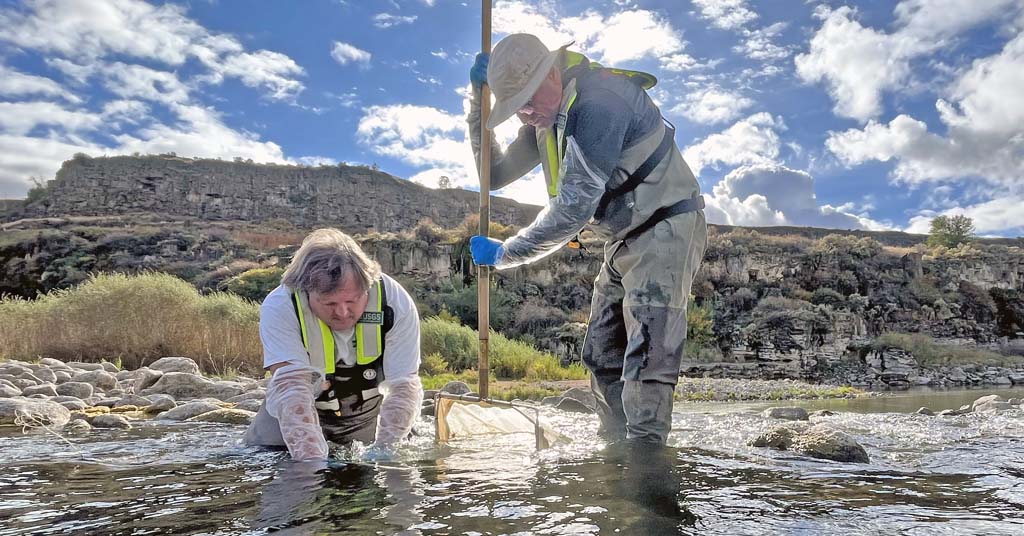
Bad medicine: USGS hydrologist Kenneth Skinner (left) and biologist Christopher Mebane collect macrophyte samples as part of a study examining the health of Snake River before and after the application of a copper treatment to eradicate invasive quagga mussels. Photo: Idaho Water Science Center
This story was updated on Sept. 12, 2025.
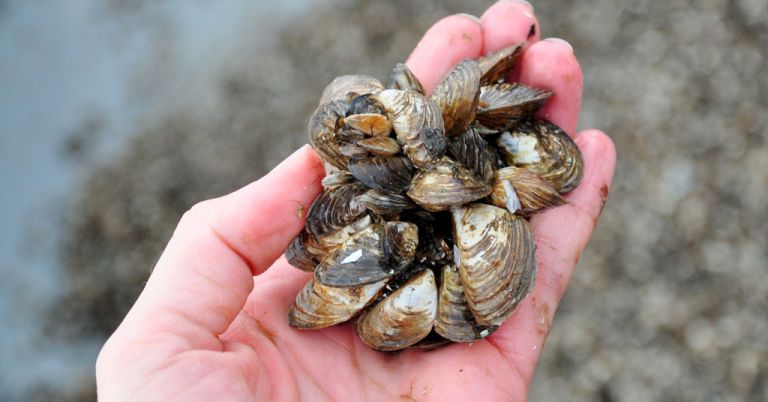
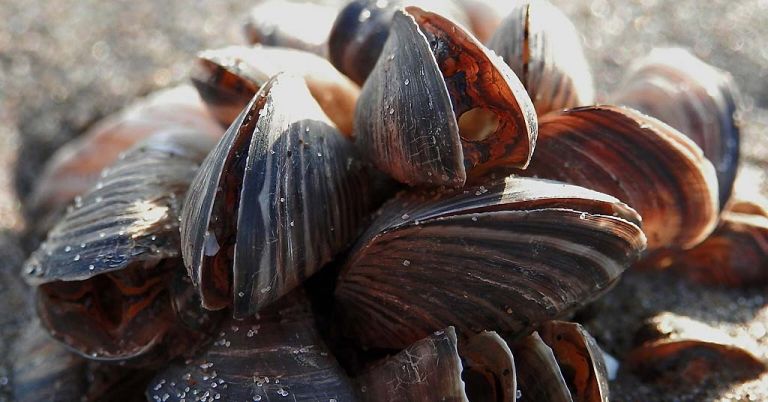
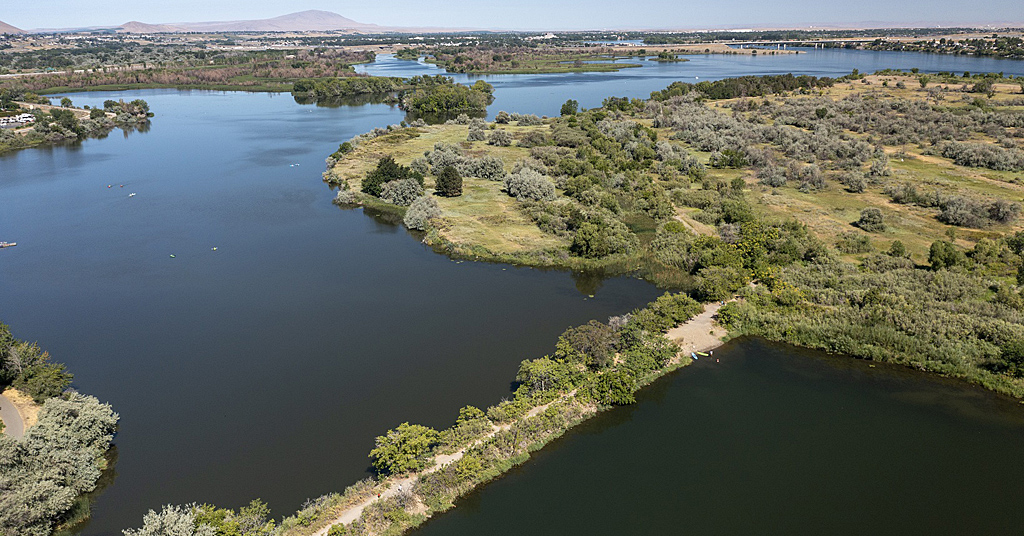
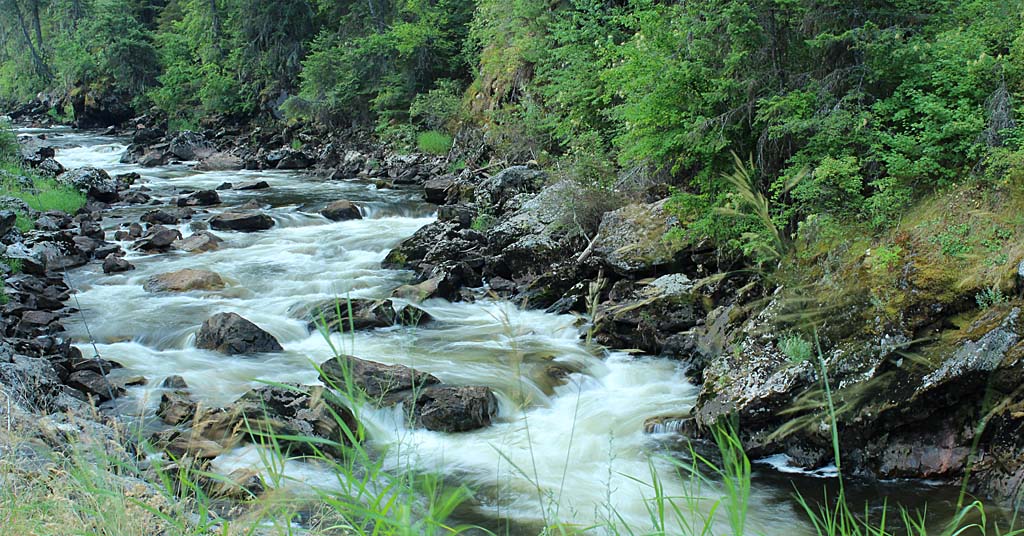
By Kendra Chamberlain. September 2, 2025. The Idaho State Department of Agriculture took a huge gamble in 2023. After detecting the first instance of invasive quagga mussels in the Columbia River Basin, state officials scrambled to implement a first-in-the-nation treatment plan, unleashing 40,000 pounds of a copper-based toxin into three stretches of the Snake River around Twin Falls.
The idea was to poison a relative few quagga mussels in order to prevent a full-blown infestation.
The treatment, however, has killed off nearly everything else in some stretches of the river.
A new report by the United States Geological Survey found that macroinvertebrate abundance decreased along the first three of six sites, from 54–94%. Sites tested beyond these locations found less to no impact on the macroinvertebrate communities from the treatment. [An earlier version of this story inaccurately reported that up to 90% of invertebrates in the entire area died as a result of the poisoning. —Editor]
The treatment, on which the state spent a reported $3 million, didn’t even work as intended.
In 2024, quagga mussels were again found in Snake River, this time upstream from the initial treatment area. The state responded with a new round of copper treatment, just as aggressive as the first response.
On Sept. 12, the Idaho State Department of Agriculture announced “a 51% reduction in the quagga mussel impacted area of the Snake River near Twin Falls. … The results show significant progress and demonstrate the effectiveness of ISDA’s ongoing treatment strategy. No quagga mussels have been detected upriver or downriver of the 2024 treatment zone.” [This information was added to this story on Sept. 21, 2025. —Editor]
The results of the treatments have been heartbreaking, according to the Idaho Statesmen.
Forty-eight of 49 local white sturgeon were killed, along with most of the yellow perch and largescale suckers in that stretch of the river.
Some fish species seem less affected by the copper treatment.
Roughly 7,000 pounds of copper solidified and settled into the riverbed along a roughly 10-mile stretch of the river, where it may impact invertebrates well into the future.
Officials expect impacts from the treatments to ripple through the fish food web for years to come. The long-term impacts of the two successive treatments are unknown but are being studied.
It’s a no-win situation for the Snake River.
Idaho officials say allowing the invasive species to gain a foothold in the river would have been disastrous. Quagga mussels wreak havoc on riparian ecosystems as well as infrastructure related to hydropower generation and agricultural irrigation.
“We understood the terrible gravity of what we had to undertake, but we also know ultimately what’s at stake,” Chanel Tewalt, Idaho State Department of Agriculture director, told the Idaho Statesman. “So we can’t shy away from making these hard decisions just because there’s difficult collateral. There is collateral either way.”






“There is collateral either way.” I don’t think this person knows what “collateral” means.
Back as wards. Humans not doing their due diligence. .They should allow be immediately fired.
So whats wrong with having some muscles in the river? They seam fine to me but whats not fine is 40,000 lbs of poison being poured in our rivers twice!
Those commenters that are taking the threat of the mussels lightly do not understand. Once they are in the river system they will spread downstream, and the damage they will do will run into the billions per year in damage to irrigation, hydroelectric, and water intakes. They are more than just a nuisance. They could be the ultimate destroyer of Salmon and Steelhead.
I ll take the mussels please! FYI mining waste is similar…have we not learned a thing? Maybe a more nuanced approach?
One of the most overlooked issues is wakeboats there is no way of completely emptying and cleaning the ballast tank or ballast bag depending on the boat also if we do get mussels the recent Outdoor Life issue pointed out they can stur up Sediment up to 20 feet deep I’m sure that would increase the distribution downstream