A proposed Federal Wildland Fire Service is receiving critical reviews from many in the firefighting community
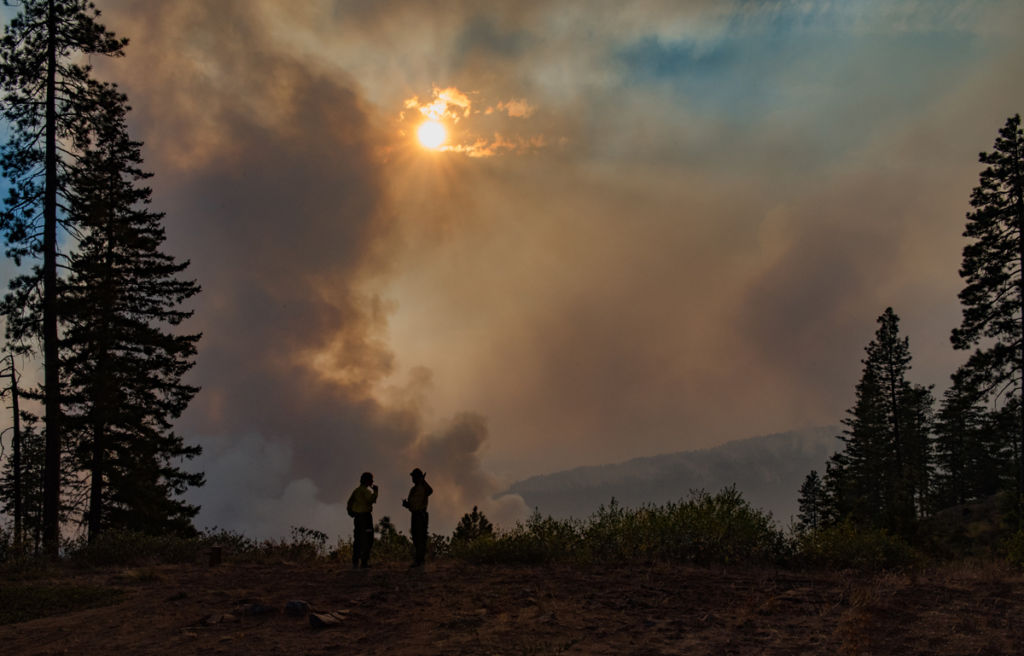
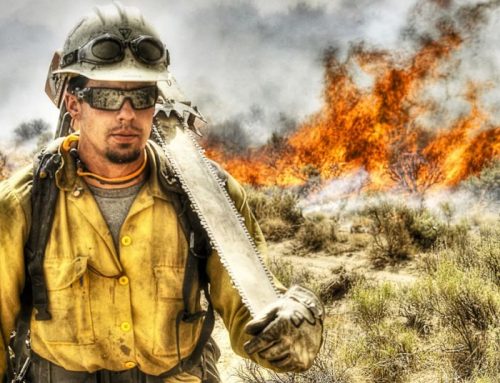
Specter vision: The future of firefighting management is unclear. Photo: Jurgen Hess
By Kendra Chamberlain. June 4, 2025. A quiet proposal to drastically restructure the nation’s wildland firefighting capabilities is gaining steam, and that has wildland firefighting experts in the Pacific Northwest concerned.
A scrappy wildland firefighter nonprofit based in Eugene, Ore., is raising alarm over a Trump administration directive to consolidate federal wildland firefighting into a single super-agency.
Timothy Ingalsbee, executive director of the Firefighters United for Safety, Ethics and Ecology (FUSEE), says the proposal has gone largely unnoticed outside of the firefighting community.
Ingalsbee traveled to Washington, D.C., this week to raise awareness about the issue his organization believes could be catastrophic to wildfire response across the country.
The proposal was first mentioned in the Fix Our Forests Act, and later included in the President’s budget bill.
“It’s been riding below treetop level, and is just now starting to pop up. Many [congressional] offices [I spoke with] were not even aware of this, because it’s been almost on stealth mode,” Ingalsbee told Columbia Insight. “In Trump’s executive order, it was the very last item; and in the skinny budget, the very last item. So that was my mission here, to make these offices aware that this is happening.”

Timothy Ingalsbee. Photo: Timothy Ingalsbee
The proposal would strip wildland firefighting management from the five federal land management agencies (United States Forest Service, Bureau of Land Management, National Park Service, United States Fish and Wildlife Service and Bureau of Indian Affairs) and form a single consolidated Federal Wildland Fire Service, under the Department of Interior, to focus exclusively on fighting fires.
News of the administration’s plans shocked many in the firefighting community, which is already reeling from DOGE-led firings, forced retirements, resignations and budget cuts.
Ingalsbee, a senior wildland fire ecologist and former federal wildland firefighter, said the idea of creating a single firefighting agency, independent of other land management strategies like stewardship and conservation, is a big step in the wrong direction—into the 1950s, he joked.
Fire management needs to be further integrated with land management, not severed from it, he said.
“Without a land base, without a conservation mission, the fear is this is just going to be all suppression, all the time,” said Ingalsbee. “And that’s a big part of the problem we’re having with wildfires. We’re burning through the fuels that could have been nicely managed by previous fires if we had managed them instead of suppressing them.”
FUSEE published a policy paper in May rebutting most of the arguments being used to push for a consolidated firefighting agency. The paper points to ecological, operational and logistical issues of a single federal firefighting force, as well as cost concerns.
It warns that steering fire management back toward suppression and away from land stewardship flies in the face of current, western place-based science and Indigenous knowledge.
The Pacific Northwest saw one of its most costly wildfire seasons on record in 2024, and is facing what’s expected to be an above-normal year for wildfire potential in 2025.
“This one thing has got the wildland firefighting community very alarmed. This could be a catastrophe,” said Ingalsbee. “There’s a lot of demoralization happening in the wildland fire community.”