After being found at a roadside rest stop, the siblings are being cared for by the Think Wild wildlife hospital
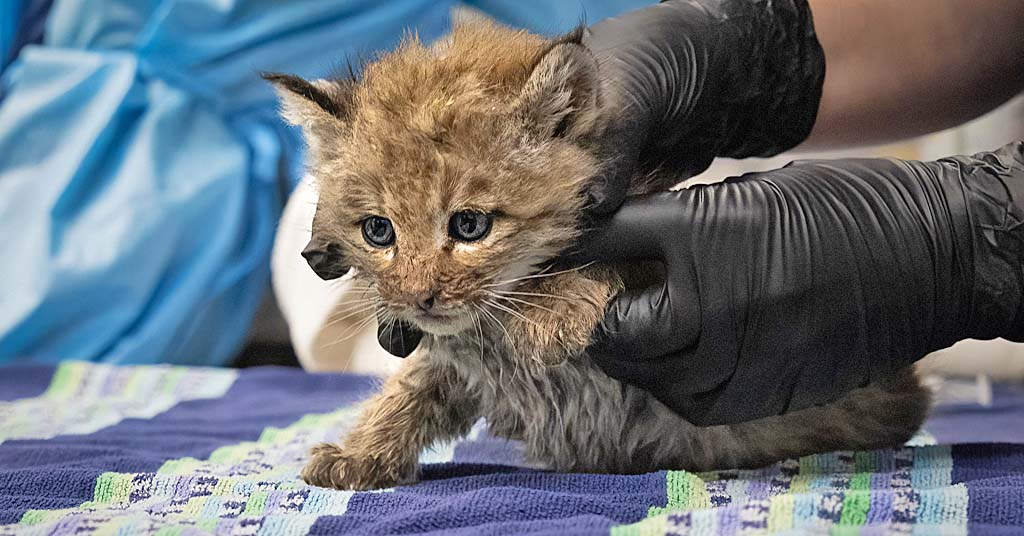
Baby blues: One of two bobcat kittens being cared for at Think Wild in Bend, Ore. Photo: Think Wild
By Chuck Thompson. June 2, 2025. Few experiences are more tragic or terrifying for children than losing a parent. That goes for wildlife as much as it does for people.
On May 18, two orphaned bobcat kittens were found alone at a rest stop near Tygh Valley in Wasco County, Ore., with no sign of their mother, who is suspected to have been killed by a vehicle.
After a night in the care of the Oregon Department of Fish and Wildlife, the kittens were transferred to Think Wild, a Bend-based nonprofit hospital and conservation center committed to the care and protection of native wildlife through rescue, rehabilitation, conservation and community outreach.
“At intake, both kittens were estimated to be approximately four weeks old, underweight, hypothermic and had diarrhea and external parasites,” according to a Think Wild statement. “They had also been fed an inappropriate diet prior to arrival. Since then, they have received around-the-clock care, including antiparasitic treatments, supportive fluids, proper nutrition, a bath and their first round of vaccines.”
The kittens are showing signs of recovery, including gaining weight and exhibiting normal bobcat behaviors such as hiding, hissing and avoiding human presence.
A bobcat kitten receives anti-parasitic medications via syringe at the Think Wild hospital and conservation center in Bend, Ore. Video: Think Wild
To minimize the risk of habituation, the kittens are receiving limited human interaction. Humans who do interact with the animals use camouflage gear and grooming techniques that simulate maternal care.
“We wear head-to-toe camouflage—ghillie suits—as well as rubber boots, rain pants and face shields to mask both our appearance and scent when interacting with young patients,” Think Wild spokesperson Molly Honea told Columbia Insight. “All rehabilitators who intend to release wildlife back to the wild use this strategy to avoid habituation of their patients to humans.”
Think Wild is consulting with other rehab facilities to determine the best timing and release criteria for the bobcats.
“It will likely be next spring, once the most severe winter weather has ended,” said Honea. “This is when bobcats naturally disperse from their mothers.”
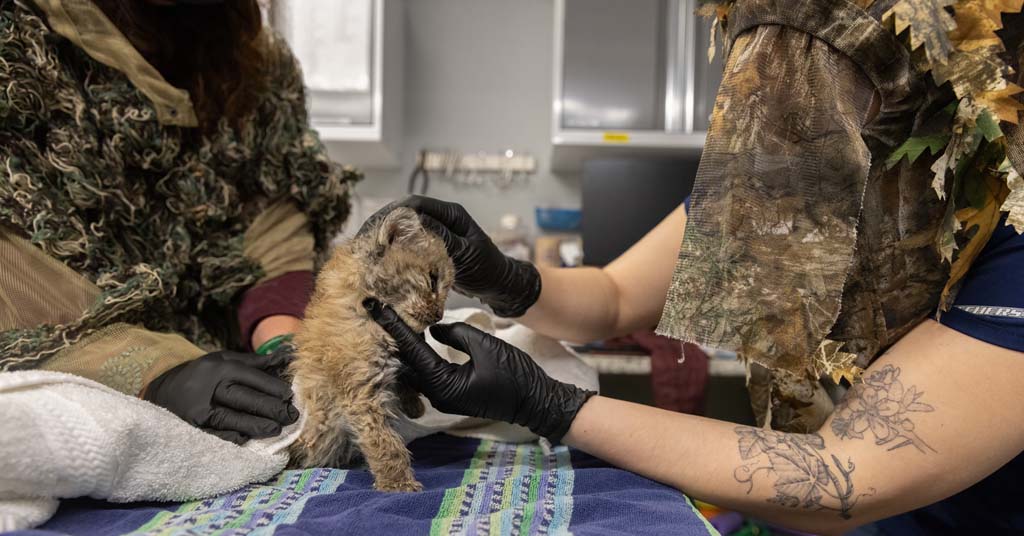
Work clothes: Humans disguise their look and scent when caring for abandoned animals. Photo: Think Wild
Bobcats are elusive native predators found throughout Oregon. They prey on small mammals, birds and reptiles.
Young bobcats typically remain with their mothers for nine to 12 months to learn hunting and survival skills.