Skip to content

Stay Updated Subscribe today for the latest research + reporting about environmental news. Subscribe Now

Stay Updated Subscribe today for the latest research + reporting about environmental news.

Subscribe Now

Columbia Insight Logo
  • Climate Change
  • Energy
  • Land Use
  • Forestry
  • Opinion
  • Water
  • Wildfire
  • Wildlife
  • Events
  • About
    • Staff and Mission
    • Board of Directors
    • Our Funders
    • Policies and Standards
    • Writer’s Guidelines
Donate
Columbia Insight Logo
  • Climate Change
  • Energy
  • Land Use
  • Forestry
  • Opinion
  • Water
  • Wildfire
  • Wildlife
  • Events
  • About
    • Staff and Mission
    • Board of Directors
    • Our Funders
    • Policies and Standards
    • Writer’s Guidelines
Donate
Donate
  • Climate Change
  • Energy
  • Land Use
  • Forestry
  • Opinion
  • Water
  • Wildfire
  • Wildlife
  • Events
  • About
    • Staff and Mission
    • Board of Directors
    • Our Funders
    • Policies and Standards
    • Writer’s Guidelines
Popular

Gorge commissioner sounds alarm about Scenic Area’s future, resigns

January 13, 2026 • 5-minute read

Quagga fail: 90% of life killed in parts of Snake River section of copper treatment

September 2, 2025 • 6-minute read

Gov. Ferguson orders investigation of WDFW commissioners following hunting group’s petition, leaked letters

August 14, 2025 • 13-minute read

Banned since 1948, fish traps return to the Columbia River

November 13, 2025 • 9-minute read

Bateman Causeway: Decades-old salmon barrier finally being removed

December 16, 2025 • 8-minute read

EXCLUSIVE: Wash. Data Center Workgroup won’t recommend clean energy requirement

November 18, 2025 • 13-minute read

New wildlife area would see Umatilla Tribes regain access to ancestral homeland

September 11, 2025 • 8-minute read

Washington issues ‘lethal removal’ order for one of Sherman pack’s last wolves

October 23, 2025 • 7-minute read

The Glamp Divide: Can luxury and wilderness co-exist?

October 16, 2025 • 9-minute read

Rowena Fire claims historic house, causes evacuation of animal shelter

June 16, 2025 • 6-minute read

Gorge commissioner sounds alarm about Scenic Area’s future, resigns

January 13, 2026 • 5-minute read

Quagga fail: 90% of life killed in parts of Snake River section of copper treatment

September 2, 2025 • 6-minute read

Gov. Ferguson orders investigation of WDFW commissioners following hunting group’s petition, leaked letters

August 14, 2025 • 13-minute read

Banned since 1948, fish traps return to the Columbia River

November 13, 2025 • 9-minute read

Bateman Causeway: Decades-old salmon barrier finally being removed

December 16, 2025 • 8-minute read

EXCLUSIVE: Wash. Data Center Workgroup won’t recommend clean energy requirement

November 18, 2025 • 13-minute read

New wildlife area would see Umatilla Tribes regain access to ancestral homeland

September 11, 2025 • 8-minute read

Washington issues ‘lethal removal’ order for one of Sherman pack’s last wolves

October 23, 2025 • 7-minute read

The Glamp Divide: Can luxury and wilderness co-exist?

October 16, 2025 • 9-minute read

Rowena Fire claims historic house, causes evacuation of animal shelter

June 16, 2025 • 6-minute read
Forestry

Log it or leave it: Oregon county ponders new way to cash in on trees

Sep 7, 2023
1
8-minute read
Share Story

If Hood River County jumps into the carbon offset market it will mark a major policy shift in a traditional logging area
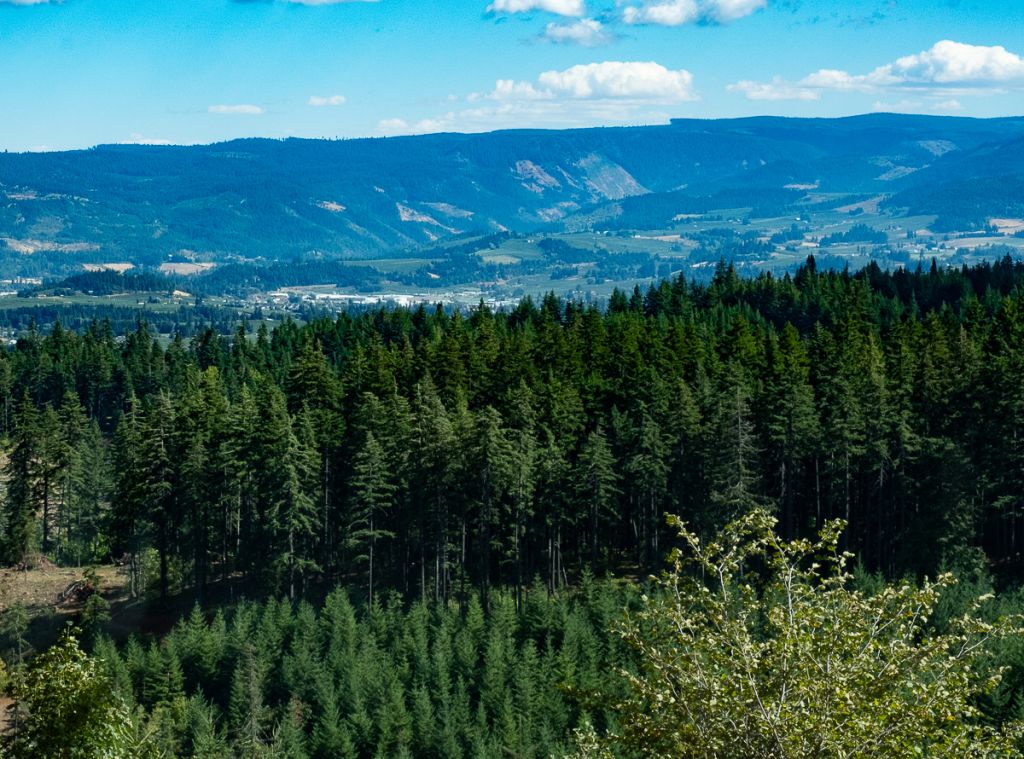
Hood River County tree farm

Standing by: Climate change may be changing the way officials decide to do business at the Hood River County tree farm. Photo: Jurgenhessphotography

By Grant Stringer. September 7, 2023. Like many rural Oregon counties, Hood River County has for decades relied on logging to help pay for county services.

But officials may have found a new way to value the county’s cash-cow 30,000-acre tree farm—selling carbon stored in the stands of fir and pine on the $2 billion voluntary carbon market.

This month, county commissioners are considering a draft plan for a carbon-offset project put together by County Forestry Director Doug Thiesies and the Portland-based nonprofit The Climate Trust.

The plan would span 40 years and would be large by Pacific Northwest standards. Thiesies has been working behind the scenes on the idea for years.

Commissioners plan to hold a public hearing in October and could vote on the project that day.

If the idea becomes reality, companies could buy carbon-storage credits from Hood River County. The credits would allow them to “count” the carbon stored in Hood River County’s tree farm as progress toward their own climate goals.

Meanwhile, the companies would be free to keep releasing carbon emissions as part of their normal operations.

Buyers in this market are varied but include tech giants such as Amazon and Microsoft, oil producers Shell and Chevron and smaller firms and individuals that want to claim credit for forest conservation while continuing to burn fossil fuels.

The county estimates it could earn $24 million from the project. But that estimate would likely change with an official inventory of the greenhouse gas stored in the tree farm. That inventory hasn’t yet been conducted.

Cashing in on carbon

Forest conservation has become a common way to generate carbon offsets for sale because trees take carbon from the atmosphere and store it.

The Intergovernmental Panel on Climate Change says protecting and replanting trees are low-cost strategies that will be crucial to averting a climate catastrophe under the 2015 Paris Accords.

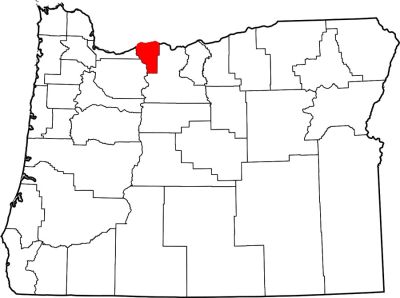
Map showing location of Hood River County, Oregon

Hood River County in red. Map: Wikimedia Commons

Supporters of the carbon market say offsets are an important way to cut carbon emissions now while companies prepare to make lasting cuts down the road.

Pacific Northwest forests have enormous potential to store carbon, and state governments in California, Oregon and Washington are all driving land-based carbon sequestration schemes in different ways.

But storing and selling carbon has had mixed success in the region, in part due to wildfires that immediately release carbon and wipe out the source of marketable carbon storage.

Plus, the carbon-worth of an offset can depend on tricky assumptions and accounting, which are at play in the county’s plans.

In an Aug. 21 meeting, Hood River County Administrator Jeff Hecksel said the project is a “no-brainer” and recommended that commissioners approve it.

County Commissioner Les Perkins, whose district includes much of the tree farm, did not respond to requests for comment from Columbia Insight.

How the HR County plan would work

The Hood River County carbon project would encompass nearly all of the tree farm, which is scattered across the Cascade Range foothills in the northern Oregon county.

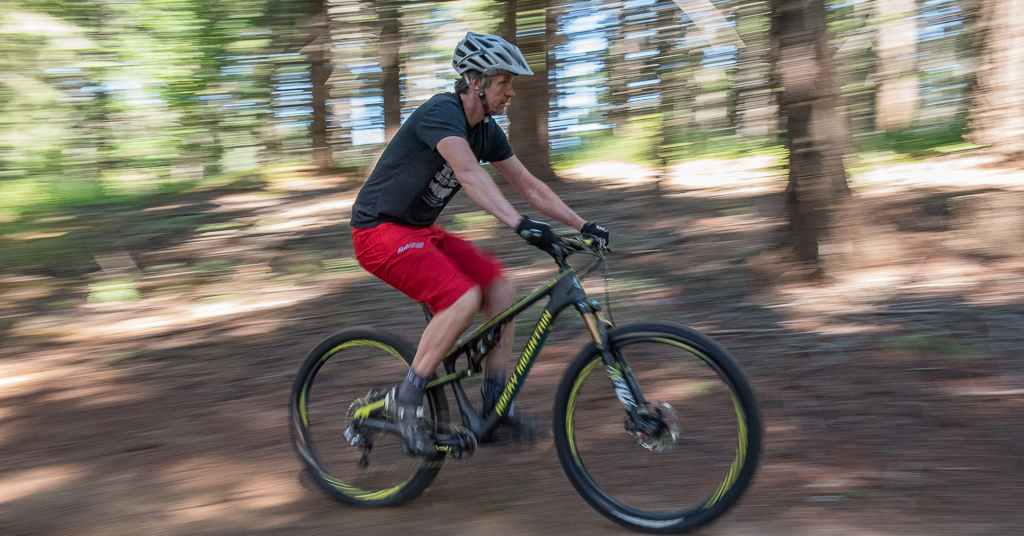
The tree farm includes Douglas fir-dominant forests on the county’s wetter, western flank, as well as more arid forests in the east. Part of the tree farm is Post Canyon, a popular mountain biking hub.

In carbon markets, an owner of timber land can create carbon offsets by planting trees, logging slower or agreeing not to log at all for decades.

In one early offset project, a Washington nonprofit conserved 520 acres of timber land near Mt. Rainier. Microsoft bought the credits, worth 37,000 tons of carbon, that would have been released into the atmosphere if the land was industrially logged, according to the Seattle Times.

On its tree farm, Hood River County harvests about 9.5 million board feet of timber each year. Logging earns about $4 million annually for the county budget.

The proposed carbon-offset project wouldn’t require the county to log any less.

But Thiesies says the tree farm qualifies as a carbon sink because the county cuts trees more slowly than most modern timber companies do.

Hood River grows its trees for 90 years on average, Thiesies says, compared to the typical 30- or 40-year rotation in the region.

Investors value this kind of management because it stores more carbon than quick harvests and clear-cutting, says Paula Swedeen, an endangered species biologist, carbon market expert and lobbyist for the Washington nonprofit Conservation Northwest.

Mountain biker Hood River tree farm

Multi-use: The tree farm is a popular mountain biking spot. Photo: Jurgenhessphotography

If commissioners approve the project, it would be registered with the American Carbon Registry, an offset certifier that sets project standards.

The Climate Trust would manage Hood River’s project and sell the carbon to buyers who want to offset their own carbon-heavy activities.

The county would pay the trust 5% of the project’s net revenue.

The county’s windfall would depend on the price of a carbon credit, which fluctuates.

But the carbon-offset market is on shaky ground.

Prices are plunging after studies have shown some offset projects don’t actually deliver carbon benefits.

The voluntary market shrunk for the first time ever this year. The Guardian reported that credits worth about 1 billion tons of carbon could be worthless because buyers may not trust their value.

However, Morgan Stanley Research estimates that the $2 billion market will balloon to $100 billion by 2030.

Pasay cited research by a UK-based analyst that found offset buyers invest more in their own climate targets than companies not participating in the market.

Thiesies says the timing is right because the county is reaping the benefit of harvesting the tree farm little by little and allowing the farm to grow.

How much real climate benefit?

A common criticism of carbon offsets is that they pay polluters but don’t necessarily cut emissions.

To become certified, a developer like Hood River County has to show that its project would store additional carbon than if it didn’t exist.

Hood River County Forestry Director Doug Thiesies

New directions: Doug Thiesies at Kingsley Reservoir in 2022. Photo: Jurgenhessphotography

That’s in question in Hood River County because officials say they’ll keep logging the tree farm on a longer rotation with or without the offset project.

Hecksel, the county administrator, told commissioners on Aug. 21 the project would earn revenue “for doing something that you’re going to do anyway.”

Thiesies told Columbia Insight the plan would require county leadership to “commit to doing what we’re doing for 40 years.”

Proving carbon “additionality” would involve scientific study, complex modeling and a few assumptions. The county would use the American Carbon Registry’s standards, which are relatively strict, says Julius Pasay, executive director of The Climate Trust.

Thiesies says the project would save carbon.

His pitch hinges on the possibility that, absent the offset agreement, the county could ramp up logging in two hypothetical scenarios—if political winds elevate politicians to the county commission who may support more logging, or if county budget pressures are so great that there’s little choice but to cut down more trees.

David Ford, who develops and manages offset projects for L&C Carbon, says those are real possibilities. Ford has worked since the 1990s to develop standards for offsets and sustainable logging and is a member of the Dundee, Oregon, city council.

Swedeen agrees. Ford describes the project as a 40-year conservation easement to prevent future commissioners from “overharvesting” or selling the land.

However, Swedeen is skeptical that the plan would store additional carbon in a scientific sense. With offsets, she says, the devil is usually in the details.

“It’s a fine line,” she says.

Fire risk

For Hood River County to successfully store carbon on its tree farm, it’ll have to maintain the project for decades.

A major threat is wildfire, which would immediately release the carbon and could throw the project into jeopardy.

Fires have skirted the tree farm in recent years, according to Thiesies.

In the case of an unplanned fire, the American Carbon Registry would release credits from an insurance pool to cover the cost of the carbon that was released.

The Climate Trust and the county may be required to “contribute a small deductible of credits” depending on the severity of the fire.

Wildfires have tanked other offset projects in the region, including part of Green Diamond’s massive restoration bid in southern Oregon, as reported by OPB, and one undertaken by the Confederated Tribes of Warm Springs.

Print Email

Grant Stringer
Grant Stringer is a freelance journalist writing about society, politics and the environment for Columbia Insight, the Washington Post, the Guardian and more. He covers state politics for The Oregonian/OregonLive and lives in Portland.

Share This Story

FacebookBlueskyLinkedInEmail

Related Posts

Feds propose opening millions of acres of Oregon forests to 1960s logging levels
Gallery

Feds propose opening millions of acres of Oregon forests to 1960s logging levels

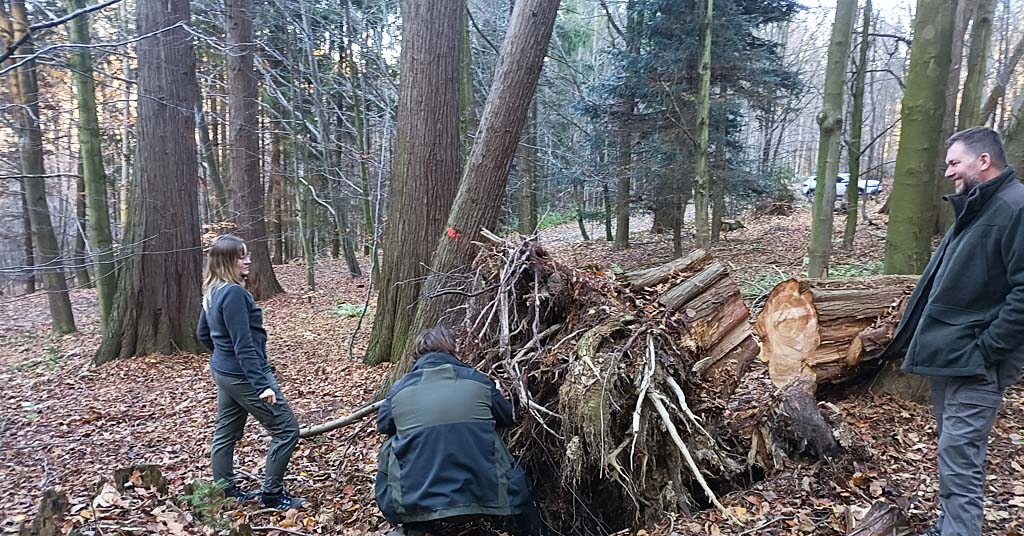
Climate change is killing this PNW tree. In Europe they want to plant it
Gallery

Climate change is killing this PNW tree. In Europe they want to plant it

Walla Walla wants to know: Does forest ‘thinning’ work?
Gallery

Walla Walla wants to know: Does forest ‘thinning’ work?

Divide and conquer: Trump’s plan to stop loggers and environmentalists from talking
Gallery

Divide and conquer: Trump’s plan to stop loggers and environmentalists from talking

One Comment

  1. Gabriela Jorge 10/19/2023 at 12:59 pm - Reply

    This project goes against the most important aspect of any carbon project, which is additionality. Additionality essentially means that a carbon financing is incentivizing a practice change. And this is not the case of this project.

    County officials themselves have said that the county will receive carbon payments for doing nothing, for continuing with the practices and forest management plans that they already have in place. What that means is that this project will bring absolutely zero climate benefits, and will flood the carbon market with poor-quality credits.

    Bad projects like these create a bad reputation for all carbon projects.

Leave A Comment Cancel reply

Columbia Insight is nonprofit and free for everyone

Support Our Work


RELATED ARTICLES

  • Mill Creek watershed where Tiger-Mill timber sale will thin trees
    Walla Walla wants to know: Does forest ‘thinning’ work?

    About 12,000 acres near the town’s water supply will be logged in the name of safety. Critics say that’s just an excuse to cut down trees

    Forestry
    Dec 11, 2025
    8
    9-minute read
  • Oregon logging operation by drone view
    EXCLUSIVE: The Forest Service is using the threat of wildfires to meet timber targets

    The agency has sought to minimize environmental oversight and used authorities critics say incentivize the logging of older trees

    Forestry
    Feb 6, 2025
    7
    24-minute read
  • Gifford Pinchot was the first head of the United States Forest Service
    How the Gifford Pinchot National Forest got its name. And lost its soul

    A new book, Forest Under Siege, presents a complex picture of one of the Pacific Northwest’s grandest treasures

    Conservation
    May 16, 2024
    4
    11-minute read
  • Humboldt Redwoods State Park
    Can redwoods and sequoias produce offspring in the Pacific Northwest?

    If not, new efforts to migrate the species to the region might need continued human management

    Forestry
    Mar 21, 2024
    6
    15-minute read

Columbia Insight is nonprofit and free for everyone

Donate today for the latest research + reporting about environmental news.

Support Our Work


YOU MIGHT ALSO LIKE

Jerry Franklin addresses members of the South Gifford Pinchot Collaborative

Divide and conquer: Trump’s plan to stop loggers and environmentalists from talking

Administration seeks to eliminate forest collaborative programs intended to ease tensions between conservationists, timber industry, USFS

ForestryTrees
Aug 7, 2025
2
16-minute read
Sherwood Forest logging Mason County, Wash.

Washington has few older forests left. Why does DNR keep logging them?

Conservationists want to stop the cutting of “legacy forests.” Logging concerns accuse them of moving the goal posts on “old trees.”

ConservationForestry
Sep 12, 2024
5
10-minute read
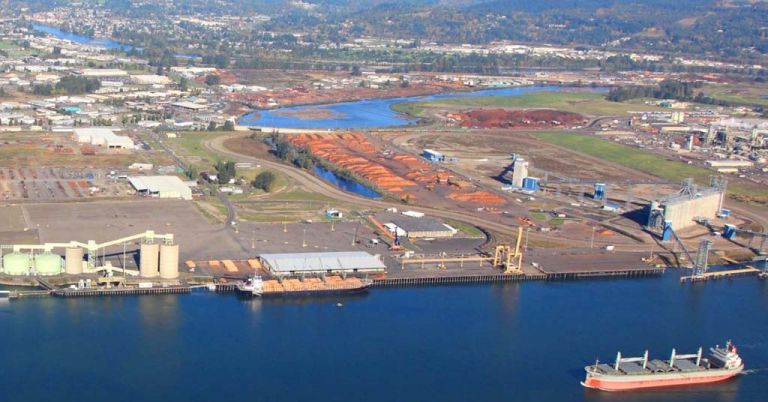
Port of Longview

UK company wants to turn Pac NW trees into international energy source

A massive biomass project proposal in Longview by the Drax Group is raising concerns about forests’ ability to power the world

EnergyForestry
Feb 15, 2024
4
10-minute read
About three-quarters of federal O&C forests in western Oregon are protected from regular logging. But Bureau of Land Management indicated it could return those acres to 1960s harvest levels, more than 10 times current harvest levels. Photo courtesy of the Bureau of Land Management

Feds propose opening millions of acres of Oregon forests to 1960s logging levels

President Trump says he’ll deploy “God Squad” to override species protections. OSU prof calls plan “insanity”

ForestryNews
Feb 23, 2026
3
4-minute read

Get Columbia Insight
straight to
your inbox

Subscribe for free weekly updates on climate, water, wildlife, land use,
and energy in the Pacific Northwest.

Subscribe Today
Beauty after fire: This grass widow flower is one of many that has come up this winter in the area burned last summer at Catherine Creek in the Burdoin Fire on the Washington side of the Columbia River Gorge. Ash, high in nitrogen, enriches soil after a fire enhancing wildflower growth and bloom.
Aperture
Beauty after fire: This grass widow flower is one of many that has come up this winter in the area burned last summer at Catherine Creek in the Burdoin Fire on the Washington side of the Columbia River Gorge. Ash, high in nitrogen, enriches soil after a fire enhancing wildflower growth and bloom.
Photo: Jurgen Hess
Columbia Insight Logo
Donate Now

info@columbiainsight.org

Topics
    • Climate Change
    • Energy
    • Forestry
    • Land Use
  • Water
  • Wildfire
  • Wildlife
  • Opinion
About
  • About Columbia Insight
  • Board of Directors
  • Our Funders
  • Policies & Standards
  • Writer’s Guidelines
Columbia Insight Logo
Donate Now

info@columbiainsight.org

Topics
    • Climate Change
    • Energy
    • Forestry
    • Land Use
  • Water
  • Wildfire
  • Opinions
About
  • About Columbia Insight
  • Board of Directors
  • Position Openings
  • Our Funders
  • Policies & Standards
  • Writer’s Guidelines
Columbia Insight Logo
Donate Now

info@columbiainsight.org

Topics
    • Climate Change
    • Energy
    • Forestry
    • Land Use
  • Water
  • Wildfire
  • Opinions
About
  • About Columbia Insight
  • Board of Directors
  • Position Openings
  • Our Funders
  • Policies & Standards
  • Writer’s Guidelines

© Copyright 2013-2025 Columbia Insight. All Rights Reserved.

As a 501(c)3 nonprofit organization, all donations to Columbia Insight are tax deductible to the full extent of the law. Our nonprofit federal tax-exempt number is 82-4504894.

SUBSCRIBE

Get Columbia Insight straight to your inbox

Subscribe for free weekly updates on climate, water, wildlife, land use and energy in the Pacific Northwest.

We do not share our lists with anyone.

Already a subscriber? Click here for other ways to support Columbia Insight.