Fish hatcheries are under criticism. But without the devil’s bargain they offer, some Columbia River Basin Tribes see a threat to their own cultures
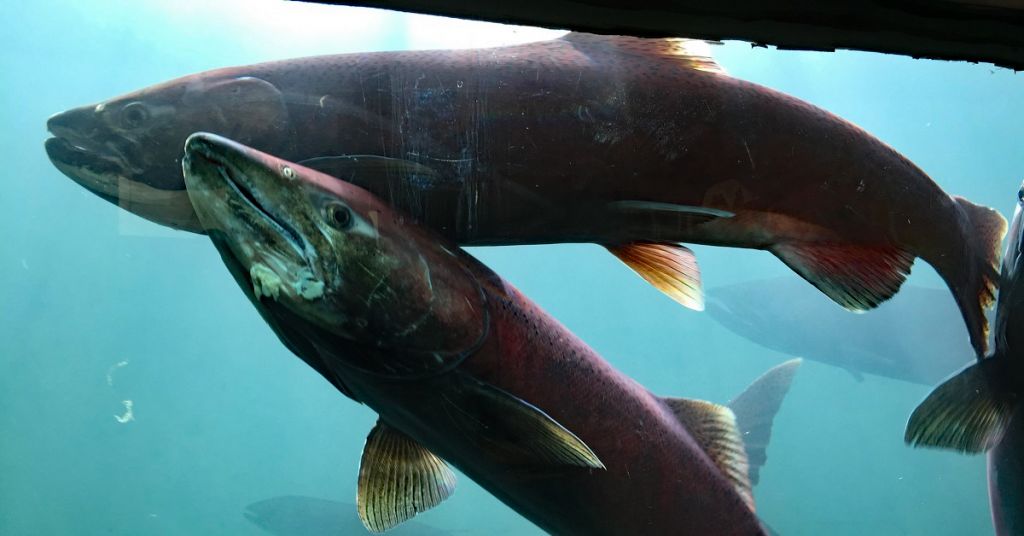
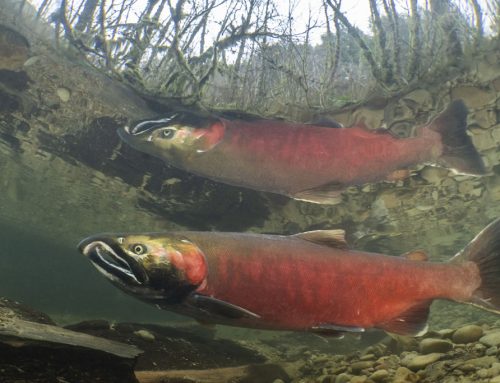
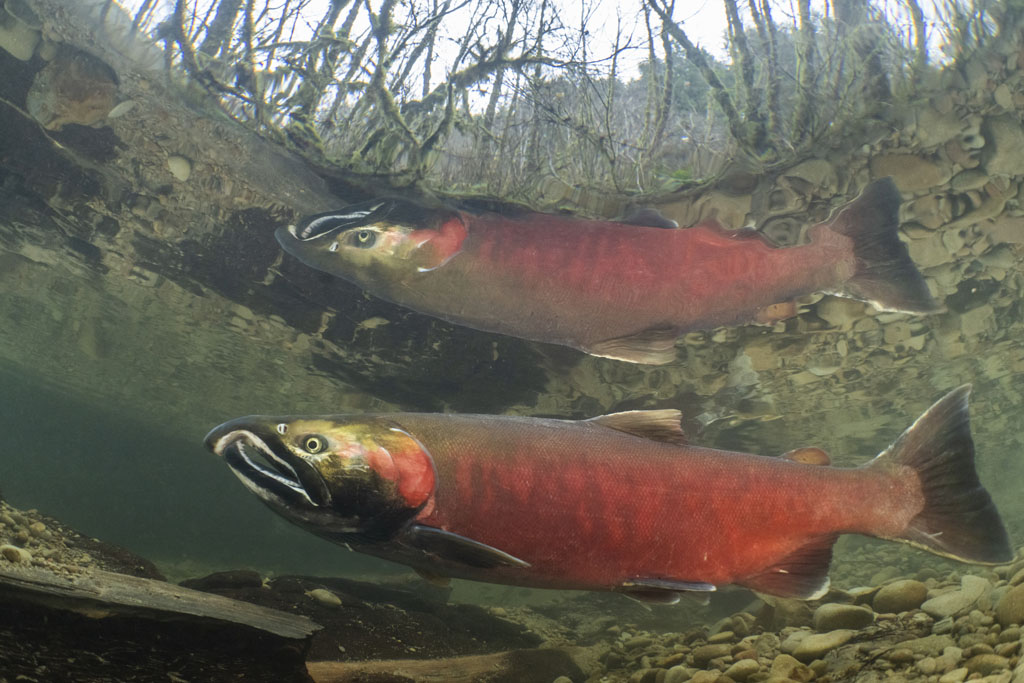
Point of no return? Wild and hatchery-born salmon get chummy in spawning streams. The differences aren’t always easy to spot. Photo: Government of Yukon
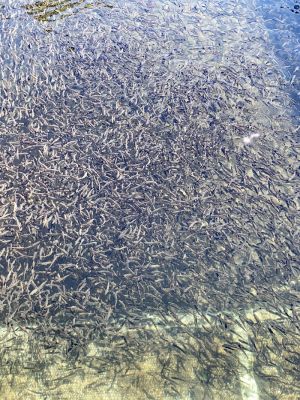
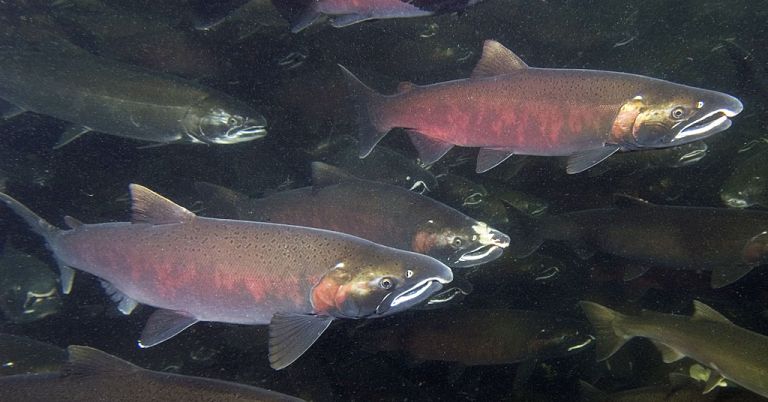
By Cole Sinanian. August 11, 2022. Rick Zollman stands at the edge of a rectangular, concrete pool, peering into the water below. Tens of thousands of juvenile chinook salmon rush toward him, their speckled backs and silver bellies glistening in the afternoon sun.
Zollman waves and smiles at the fish as they leap from the water to greet him, conditioned to expect food when they sense the presence of their loyal caretaker.
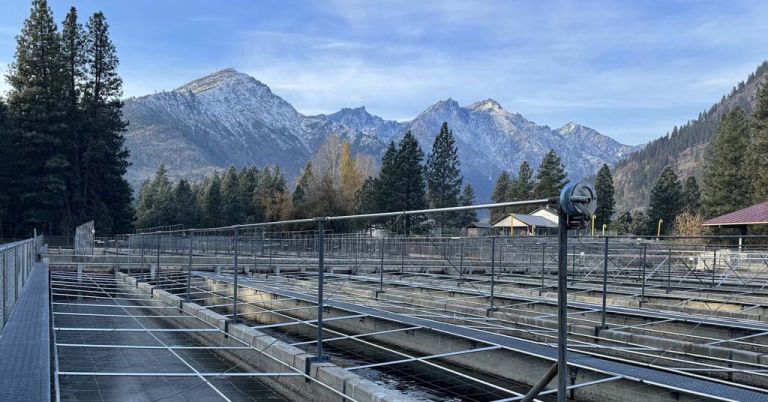
Each of the 18 pools—or raceways—at northeast Oregon’s Lookingglass Hatchery holds roughly 65,000 juvenile chinooks, totaling nearly 1.5 million fish.
The fish were hatched here in January from parents collected in one of five of the region’s rivers, then transferred to the raceways in spring. They’ll remain here for a year, growing and maturing until ready for release into the wild.
Shaded by towering lodgepole and ponderosa pines, Lookingglass Hatchery sits along Lookingglass Creek, not far from the Idaho border in the historic homeland of the Nez Perce Tribe.
The Nez Perce and Confederated Tribes of the Umatilla Indian Reservation share fishing rights to Lookingglass Creek, and share the tribal harvest allocation. For centuries, tribal families have gathered here to harvest salmon returning from the Pacific. [A previous version of this story incorrectly stated the Nez Perce own exclusive fishing rights to Lookingglass Creek. —Editor]
The Tribe uses the hatchery to restore the area’s natural population of wild chinook, in the hopes that they may one day reach levels that support consistent harvest.
The hatchery dilemma
In a controversial practice known as “supplementation,” Lookingglass managers take mature wild fish from the area’s streams and spawn them at the hatchery.
The goal is to ensure that the fish released from the hatchery are from the same genetic lineage as the wild stock, so they can return to spawn naturally, effectively making their offspring a part of the wild population.

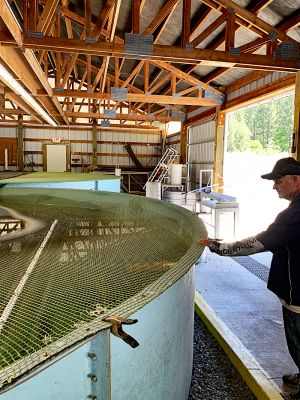
Salmon-sitting: Rick Zollman checks in on a pen full of broodstock at Lookingglass Hatchery. Photo: Cole Sinanian
Many scientists and conservationists have pointed to hatcheries as a contributing factor to the demise of wild salmon stocks in the Pacific Northwest. Releasing hundreds of millions of domesticated hatchery fish into the watershed each year allows for the rationalization of overfishing and habitat destruction, they say, and adds pressure on the comparatively few remaining wild fish by reducing their genetic fitness and increasing competition for resources.
But for tribes like the Nez Perce, whose culture is inextricably bound to salmon, hatcheries may be all that’s preventing their traditional way of life from disappearing entirely.
To supply fishing grounds while minimizing the effects of hatcheries on endangered wild salmon, tribal-operated hatcheries are employing innovative but experimental methods like supplementation to restore wild fish populations in the rivers where they were lost.
“With hatcheries, they’re not a solution, they’re a tool,” says Zollman, who works for Nez Perce fisheries but is not a tribal member himself. “The idea is that we still have fish spawning so our grandkids can go watch them, and still be able to catch fish and have them on the table.”
At Lookingglass, the spring chinook conservation program operates for rivers in the Grande Ronde and Imnaha river systems.
Lookingglass is one of five hatcheries among the 33 operated by the Oregon Department of Fish and Wildlife that has a conservation program. Like Lookingglass, the others—Cascade, Irrigon, Umatilla and Wallowa hatcheries—each have tribal co-management.
How supplementation works
The Lookingglass program uses supplementation—essentially removing wild fish from rivers and integrating them into hatchery broodstock—to produce the next generation of salmon.
Chinook spawned at the hatchery eventually return to their natal streams as adults to spawn naturally, producing offspring that are both genetically and behaviorally indistinguishable from wild-origin fish.
The National Oceanic and Atmospheric Administration regulates hatcheries that take endangered salmon populations—such as Columbia River spring chinook—for broodstock.
See for yourself: Lookingglass Hatchery in Elgin, Ore., is open daily for public visits. Photo: Cole Sinanian
“For a conservation hatchery, typically we have objectives or goals that are solely to restore the wild spawning populations,” says Lance Kruzic, a NOAA fisheries biologist. “It’s a very defined program, with the intention being conservation or recovery.”
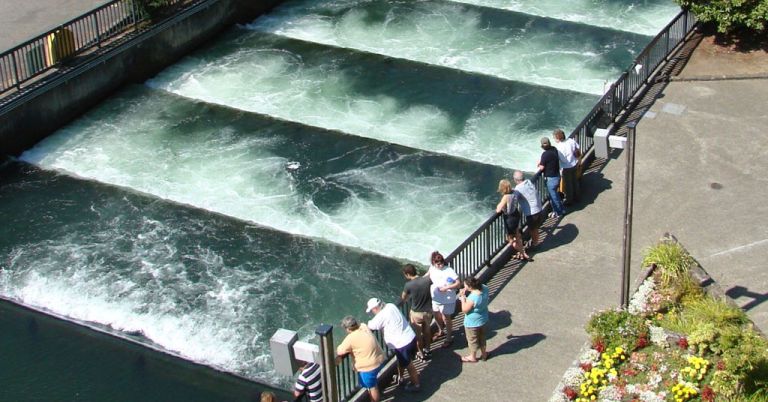
To prevent an overabundance of hatchery-reared fish on the spawning grounds, which generally have greater return numbers than wild-origin fish, Lookingglass managers employ an elaborate system of weirs (fish traps) to maintain a healthy ecosystem balance.
In what’s referred to as the “sliding scale” method, Lookingglass managers use the weirs to select how many of each type of fish — hatchery-reared or wild — reach the spawning grounds. The number of a given year’s wild returns determines the number of hatchery fish allowed to reach the spawning grounds.
Lookingglass managers also use the weirs to adjust the number of wild-origin fish taken for broodstock based on that year’s wild returns. During years when wild returns are low, more hatchery-origin fish—which are marked by the removal of a portion of their adipose fin—are collected for broodstock, so as to not interrupt the wild chinook population’s recovery.
“The weirs allow everything to be controlled,” says Zollman. “We don’t inundate the natural fish, but we don’t leave the spawning grounds empty.”
Once collected, broodstock are spawned at the hatchery and their offspring are incubated, then transferred to massive early-rearing tanks.
Once the young fish reach a few centimeters in length, they’re segregated based on the rivers their parents originated from—this prevents biological connections from being compromised.
After about a year of maturing in the raceways, the fish are trucked to acclimation sites (small pens near the spawning grounds in their home rivers) where they spend their final four to six weeks before release.
It’s here that fish internalize the rivers’ unique chemical and magnetic cues that will one day guide them home.
They also lose their domestic tendencies. By this point young fish no longer swim toward humans expecting to be fed.
In total, the fish spend 18 months at the hatchery before release.
Low numbers, long game
When Lookingglass began its conservation program in 1997, each of the area’s watersheds had only a few dozen fish returning to spawn.
At Lookingglass Creek, those numbers were in the single digits.
Now, hundreds of fish return to Lookingglass Creek each year—enough to support limited sport and tribal fisheries.
While year-to-year numbers fluctuate wildly, average annual returns in the nearby Lostine River now top more than 1,000, according to data provided by Zollman.
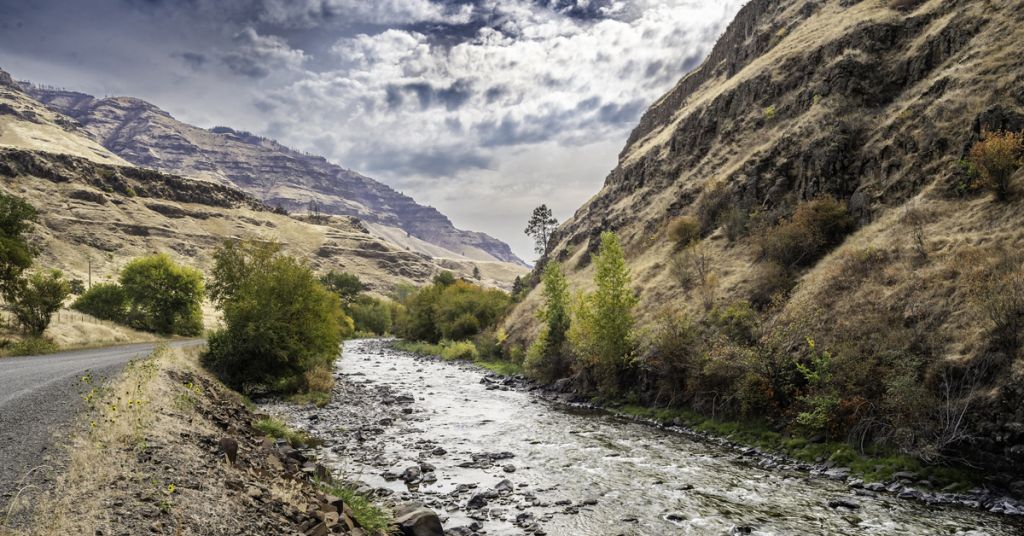
Running program: Built in 1982, Lookingglass Hatchery is used to rear spring chinook for the Grande Ronde and Imnaha rivers (pictured) as part of Lower Snake River Compensation Program. Photo: Max Rae/CC
Salmon had a particularly prosperous year in 2010, when returns to the Lostine were close to 5,000. Half of 2022’s returns to the Lostine—which have yet to be fully counted—were wild-origin fish.
Factors that affect annual fish returns beyond what the hatcheries are doing include ocean conditions, commercial fisheries and habitat accessibility.
“The success of a hatchery program depends on good habitat and good survival conditions for the fish, just like in the wild,” Kruzic says. “It may take decades to get those increases from a conservation hatchery program.”
The trouble with supplementation
Supplementation represents a shift in hatchery management that began around the turn of the century.
But some scientists say these programs are risky. Studies have shown that deliberately interbreeding hatchery fish with natural-origin fish can negatively affect wild populations.
Salmon are biologically linked to the rivers they come from. Raising juvenile fish in an artificial habitat can make those fish less suited to natural environments, decreasing the chances that they return home to spawn.
This lack of biological fitness carries on to the hatchery fishes’ offspring, which can genetically weaken the local wild populations when the two interbreed, according to a recent report by the Washington Department of Fish and Wildlife.
“Hatchery fish are domesticated, and that difference is actually programmed into the genetics of the fish themselves,” says Jamie Glasgow, director of science and research at the Wild Fish Conservancy, a Washington-based nonprofit conservation organization. “If wild fish interact and spawn with hatchery fish, the next generation of offspring from that hatchery and wild pairing is much less likely to survive in the wild.”
[perfectpullquote align=”full” bordertop=”false” cite=”” link=”” color=”” class=”” size=””]“If you took hatcheries out of the mix, you’d get pockets of wild fish. You’d have museum-piece fisheries.” —Mike Matylewich, Columbia River Inter-Tribal Fish Commission[/perfectpullquote]
Beyond genetic risks, some scientists and conservationists see using hatcheries for conservation as a backward approach to wild fish recovery. Excessive hatchery production is often cited as one of many contributing factors to the rapid decline of Pacific Northwest wild salmon over the past century.
Since the region’s first hatcheries were built in the late 1800s, the majority of hatchery programs have operated under an agricultural model of fish production.
This approach relies on the sheer volume of fish produced to sustain runs and support fisheries without consideration for habitat restoration or the fishes’ genetic fitness, says Jack Stanford, a retired professor and fisheries ecologist at the University of Montana.
“There’s this mantra out there that you can replace lost catch because of the demise of wild fish with hatcheries,” he says. “And it does not work.”
The net result is the entire Pacific Northwest salmon fishery being reliant on a system that may be contributing to the decline of the very fish it’s intended to save.
“It’s like we’re trying to save this patient, but we’re standing on their throat while we’re doing it,” says Glasgow.
‘Museum-piece fisheries’
While hatcheries may have historically used an ecologically irresponsible management approach, some members of the Columbia River Plateau Tribes view them as essential to keeping ancient traditions alive.
They see supplementation as necessary to not only saving the fish from extinction, but to keeping salmon in the rivers and streams in tribal homelands that once served as sacred fishing grounds.
The lives of the indigenous people who inhabit the plateaus and valleys of the Columbia River Basin once completely revolved around salmon. The seasonal returns of salmon to natal streams are integral to their cultures.
“We’re a salmon people,” says Joe Oatman, a member of the Nez Perce Tribe and director of the Harvest Division of its fisheries program. “Our whole identity and our whole view of the world revolve around salmon. And to be salmon people, we need to have salmon in the rivers.”
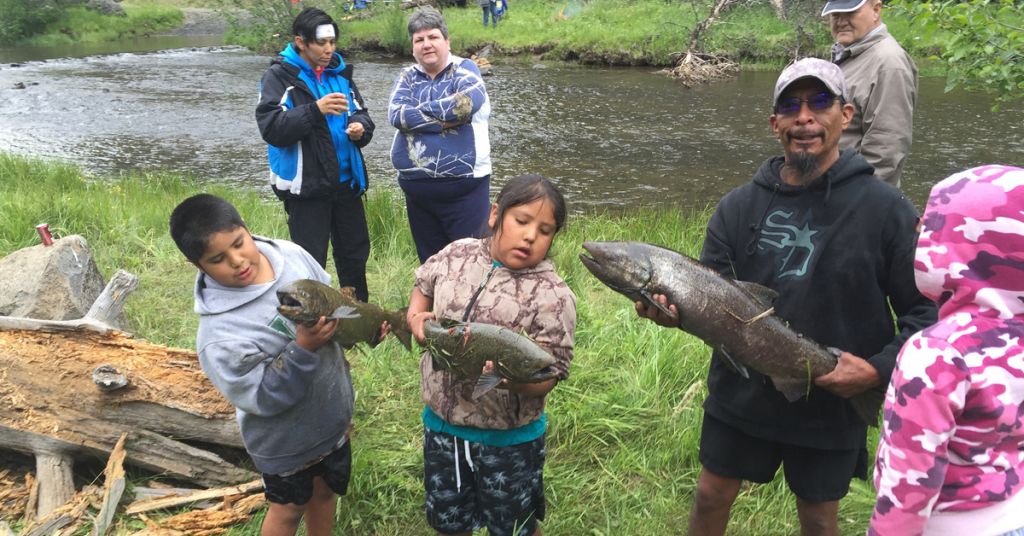
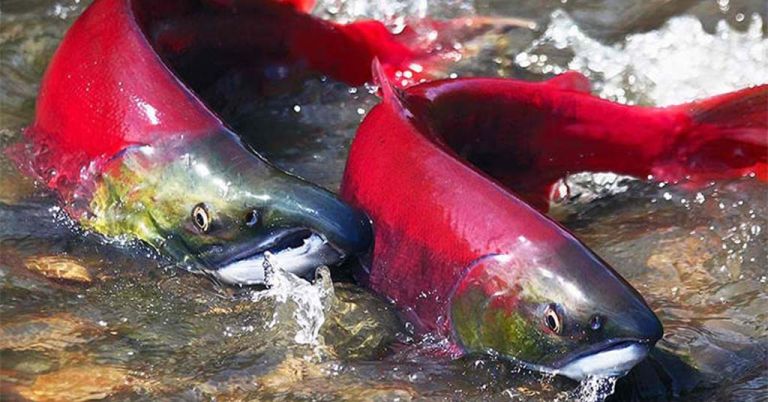
Salmon, people: Members of the Burns Paiute Tribe release hatchery-raised chinook salmon into the Masher River in Oregon, then harvest the salmon using traditional fishing methods such as spears, nets or baskets. Photo: USFWS
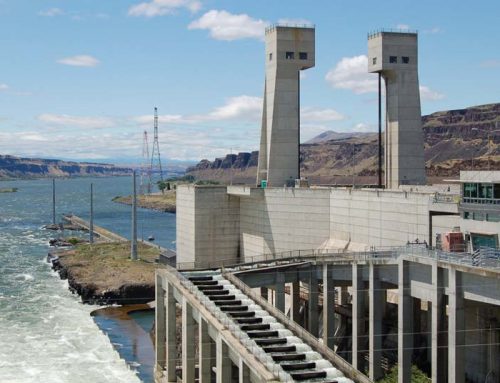
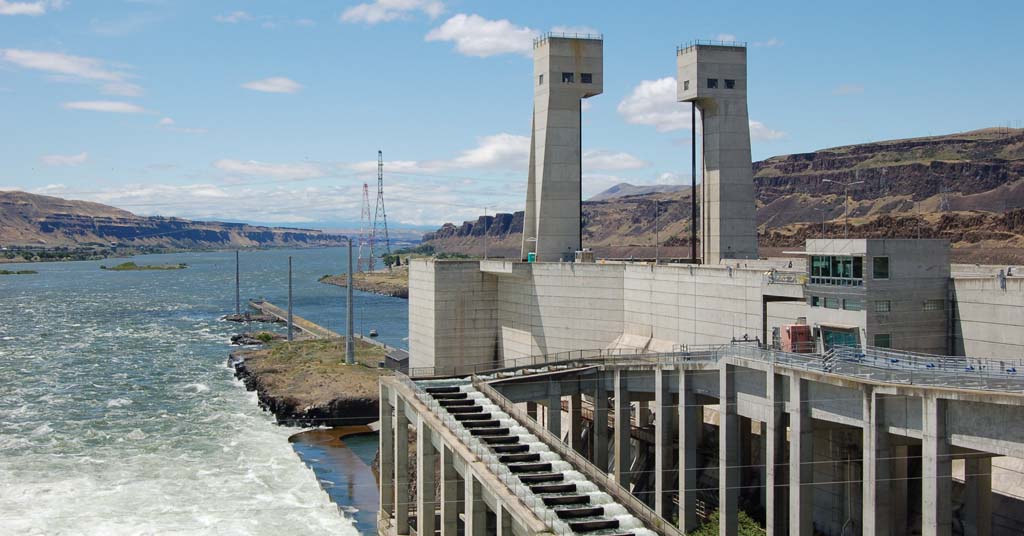
Construction of hydroelectric dams throughout the 20th century brought the elimination of more than 40% of historic salmon habitat and the destruction of culturally and economically significant tribal fishing places.
This was devastating to the Nez Perce, who historically consumed more than 300 pounds of salmon per person per year, according to Oatman. Now a tribal member might be fortunate to catch two or three fish a year.
With historic fishing places either inaccessible or lacking fish, many Nez Perce families now must travel long distances to harvest their yearly catch. The resulting economic burden forces many to make difficult decisions about whether to prioritize finances over cultural preservation.
“These days, it’s a really tough choice for many tribal families to decide where they want to go harvest fish to try and meet their needs throughout the year,” says Oatman.
This is why hatcheries are essential, despite their questionable history, says Mike Matylewich, fisheries and management director for the Columbia River Inter-Tribal Fish Commission, which coordinates fishery management policies for the Nez Perce, Umatilla, Warm Springs and Yakama tribes.
Closing hatcheries altogether would leave huge portions of the Columbia River Basin salmon-free, and greatly reduce tribes’ ability to harvest on their historic fishing grounds.
“If you took hatcheries out of the mix, you’d get pockets of wild fish,” says Matylewich. “You’d have museum-piece fisheries.”
Fighting chance
Lookingglass is considered to be among Oregon’s more successful conservation hatchery programs.
While numbers are nowhere near enough to sustain a fishery robust enough to supply the Nez Perce year-round, the program has prevented the region’s spring chinook salmon population from disappearing entirely.
Zollman says that for the foreseeable future it’s unlikely numbers will reach a point where the hatchery program is no longer needed, given the many factors contributing to the fishes’ mortality that are beyond his control.
But in terms of giving salmon a fighting chance at survival, Zollman is confident the program is working.
For Oatman, the fact that there are still fish in these rivers at all is a sign of a successful supplementation program.
The region’s Nez Perce may not be able to harvest enough salmon to sustain their total dietary needs as they once could. But they can still fish in the traditional places used by their families for generations.
“It’s more than just catching a few fish to bring home,” says Oatman. “It’s about finding a place where we can pass on these traditions that have been there for countless generations.”
The Collins Foundation is a supporter of Columbia Insight’s Indigenous Issues series.









They read that salmon are dependent on people. Nope, human populations were before the white man arrived dependent on the salmon.
The white man and his/her ways are even more dependent on salmon that the Indigenous Peoples.
White folks raise cattle, cattle require food, cattle range has to have fertility to grow grass. There is no source of nitrogen west of the 110 Meridian except salmonids.
Your vast open spaces are dying of starvation. When they are gone, everyone will inherit a region that resembles Afghanistan in every aspect.
The Last Resort
Eagles 1976
They brought the white man’s burden down
Brought the white man’s reign
And trashed a planet, again.